Trade Show Booth Pricing: A Practical Guide
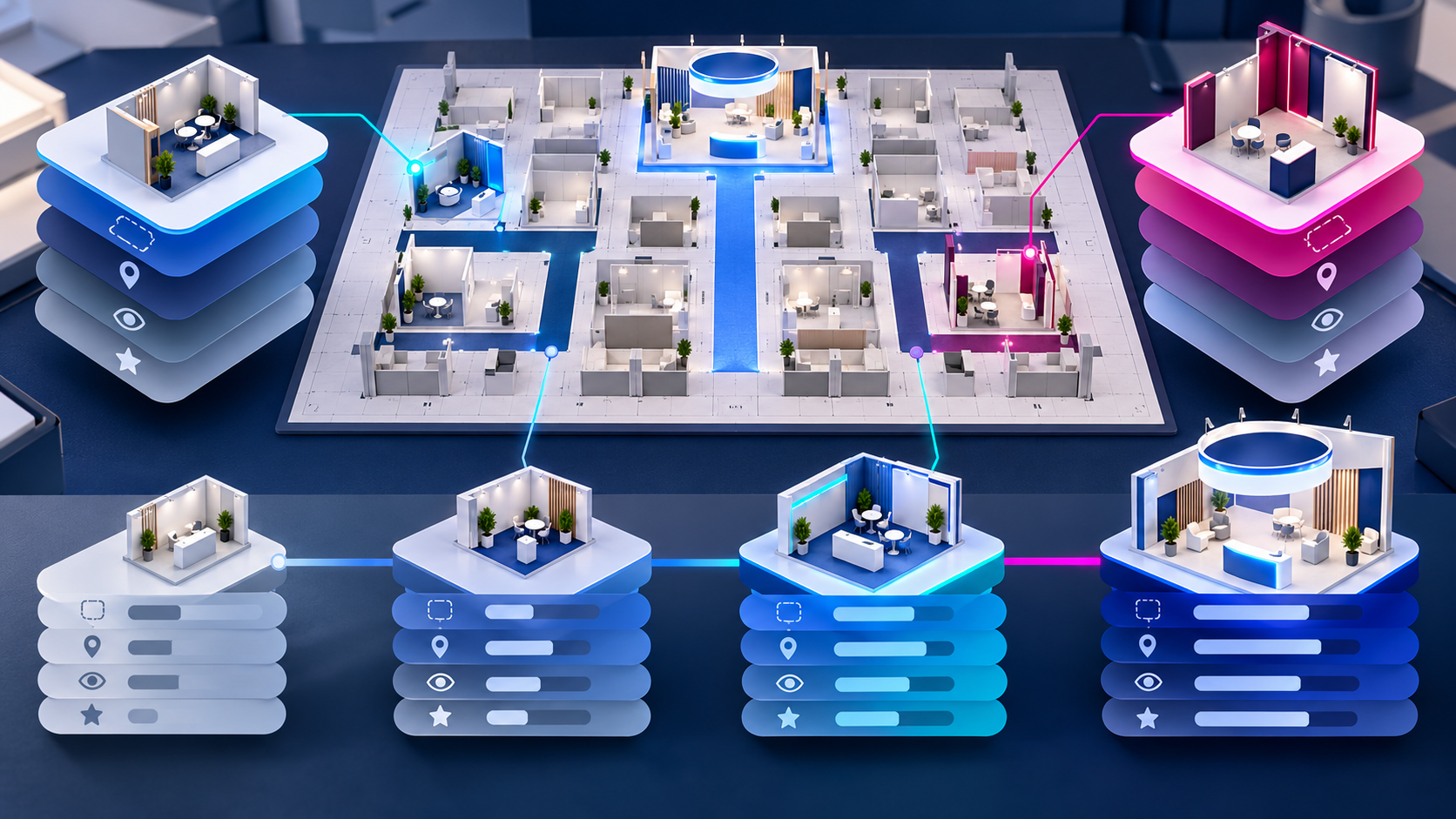
Create booth prices that buyers can understand, sales teams can defend, and organizers can manage as inventory changes.
Quick answerTrade show booth pricing should begin with the cost and value of the sellable space, then account for size, location, visibility, included services, demand and buyer segment. Use a small number of clearly defined zones, publish what each price includes, and connect the rate to live floor-plan inventory. Review sell-through and renewal evidence after every event instead of raising every booth by the same percentage.
Why Booth Pricing Is More Than Cost Per Square Foot
Area matters, but two booths of the same size may create different value. One may sit near an entrance, stage or food area. Another may offer two open sides or a larger branding surface. A third may include furnishings, digital visibility or association benefits.
At the same time, pricing every small difference creates confusion. The goal is a model that reflects meaningful value without turning the floor plan into a maze of rates.
Start With the Financial Floor
Calculate direct and shared costs associated with the expo: venue space, floor-plan production, pipe and drape, utilities, registration, payment processing, staffing, security, cleaning, insurance, technology and service. Decide which costs belong in the base booth and which should remain optional.
Add the required contribution toward event overhead and program goals. A booth price that covers only visible production costs may still leave the event dependent on uncertain sponsorship or registration revenue.
Define the Base Booth Clearly
Buyers should know what the standard rate includes. Specify dimensions, number of exhibitor registrations, listing or profile benefits, furnishings, power, internet, lead tools, badges, service charges and taxes. If a utility must be ordered from the venue, say so before checkout.
Create a stable base product before adding premiums. Otherwise, exhibitors cannot compare options and staff cannot explain the invoice consistently.
Use a Small Number of Pricing Factors
Size and configuration
Price larger footprints with a transparent formula or published rate table. Define corner, peninsula and island configurations carefully. Confirm that each configuration meets venue and fire-code requirements before it is sold.
Location and traffic opportunity
Premium zones may reflect entrance visibility, proximity to anchors, central intersections or other defensible advantages. Avoid describing traffic as guaranteed. Location creates opportunity; the exhibitor still controls its design, staffing and engagement.
Open sides and visibility
A corner booth may justify a modest premium because it has two open aisles. Use the same rule throughout the hall and show it on the floor plan. Exceptions made during negotiation can undermine trust.
Included services
Bundled power, furniture, enhanced profiles, registrations or lead tools can create a higher-priced product. Make the included value visible and separate optional services that vary by exhibitor.
Timing and commitment
Early renewal or priority selection can reward commitment without training buyers to wait for a discount. Publish eligibility, deadlines and selection order. Avoid last-minute discounting that penalizes exhibitors who bought early.
Choose a Pricing Model
Flat rate
One rate for a standard booth is simple and fair when locations and inclusions are similar. Add clearly priced size or corner upgrades.
Zone pricing
Use two or three floor-plan zones when location differences are meaningful. Give each zone a name that describes value rather than prestige and maintain visible boundaries.
Member and nonmember pricing
Associations may offer a member rate when eligibility and organization relationships are reliable. Define the date on which status is evaluated and how changes are handled.
Package pricing
Combine booth space with registrations, digital profiles or sponsorship benefits when the bundle serves a clear buyer need. Show the components and avoid padding a package with benefits exhibitors rarely use.
Connect Pricing to the Live Floor Plan
A spreadsheet rate card becomes risky when booth inventory changes. Tie booth type, dimensions, zone, status and price to the same interactive floor plan buyers and staff use. This reduces conflicting information and makes availability easier to understand.
Document who can change a booth’s price or zone and how approved exceptions appear in reporting. Sales flexibility needs an audit trail.
How to Test a Price Before Launch
- Compare price with direct cost and contribution target.
- Review renewal behavior by booth type and location.
- Ask sales and service teams which distinctions buyers already recognize.
- Test the rate card with a small group of trusted exhibitors.
- Model base, conservative and high sell-through scenarios.
- Confirm that checkout, invoices and refunds can represent every price rule.
Use Map D’s exhibitor pricing calculator to make assumptions visible. A model is useful when the inputs can be challenged and updated.
Communicate the Rate Card Clearly
Publish the booth type, dimensions, included benefits, eligibility, price, taxes and optional services in one place. Use the same names on the rate card, floor plan, checkout, invoice and exhibitor agreement. Small naming differences can make buyers think they are comparing different products.
Show examples for common configurations. If two standard booths combine into a larger space, explain whether corner premiums, included registrations or service allowances change. State how nonprofit, startup, member or first-time exhibitor rates are verified and whether inventory is limited.
Train sales and service teams on the reason behind each rule. They should be able to explain a premium without promising traffic. Give them an approved path for exceptions so the buyer receives a timely answer and the final rate is recorded correctly.
Model Revenue Scenarios Before Sales Open
Build at least three scenarios. The conservative case should reflect lower sell-through and realistic cancellations. The base case should use normal renewal and sales patterns. The upside case should identify the exact premium inventory, new exhibitors or price improvement required.
Test what happens when standard booths sell faster than premium zones, or when large footprints block smaller inventory. Review cash timing as well as total revenue. Deposits and payment dates affect event financing even when the final contracted value is strong.
Share the assumptions with finance and operations. A revenue target is credible only when the floor plan contains enough sellable inventory and the service team can deliver what the rate includes.
Discounts, Holds and Exceptions
Create rules before sales begins. Define who can approve a discount, what information must be recorded, how long inventory can be held and when an unpaid reservation returns to market. Apply credits and make-goods consistently.
Track the realized rate, not only the list price. If premium booths regularly sell only after discounts, the zone or included value may need redesign.
Review Pricing After the Event
Analyze sell-through, time to sale, discounts, cancellations, waitlists and renewal by booth type and zone. Combine this with service issues and exhibitor feedback. A sold-out zone can support a change, but first ask whether capacity, timing or selection rules created artificial scarcity.
Change one or two meaningful elements at a time. Rebuilding every price rule each year makes results harder to compare and the program harder to explain.
FAQ
How much does a trade show booth cost?▼
There is no universal price. Cost depends on event audience, booth size, location, included services, venue costs and market demand. Organizers should publish exactly what the rate includes.
Should corner booths cost more?▼
A consistent corner premium can be reasonable because the booth has two open aisles. Keep the rule modest, visible and consistent across comparable inventory.
What is zone pricing for trade show booths?▼
Zone pricing groups booths into a small number of rates based on meaningful location or value differences shown on the floor plan.
When should booth prices change?▼
Review prices after each event using sell-through, time to sale, discounts, renewal, service cost and exhibitor feedback rather than applying an automatic increase.